Showing posts with label wild flowers. Show all posts

Sunday, April 26, 2015

Walking the bluebell trail along Bull Run

I went for a walk at the beginning of the bluebell season the native flowers that are so many shades of purple to blue and even white in some rare cases growing in the flood plain where they get watered a lot this time of year. Bull run is the creek that passes under the old stone bridge in the Manassas Battlefield park where this bluebell trail begins. There are lots of different native flowering plants that poke up their heads up in these early spring weeks between freezing cold and the forest's leaves open and blocking the light that falls warming the earth below. All these native flowers are a delight and I have gone to the trail a few times this year to check on the bluebells progress.

Blue bells are the largest and most dramatic of the native flowers in the woods. They stand about a foot high and grow in clumps forming a carpet of lavender blue and fresh green on the edges of the creek in the low flood plain areas.


 The flowers are difficult to photograph as the eye sees them, the blue really jumps out  of those green areas but I haven't found a way to show that the same way we see.
 Mixed in the flowering forest floor are little spotted leaves and bright yellow flowers the Trout Lilies.
  
 Near by and a little earlier were the Dutchman's Breeches a cousin to the bleeding hearts so many of us love in our own gardens. Spring beauties also are abundant along the trail and are very short beside the taller flowers but native bees depend on their abundant early blooms.

On a sunny day the best places to take the wildflower photos is where shade falls from the tree's trunks so the high contrast is reduced and the colors show up. 


Tree frogs are singing to their mates all over the wooded areas along the creek's edges.
 On my hike, I met a group of three Park Rangers riding on horseback who said hello and continued down the trail towards the bridge. As it was free day they didn't ask for a pass or anything but greet me and keep on walking... 
This trail comes to a point where the creek banks are too steep to continue at the edge of Bull Run and the flora change as the trail turns up towards the wooded hill and an evergreen area. Mosses and a few ferns as well as one of my favorites the bluet a tiny blue flower with four petals that is sky blue. My photo blew out the color and made them look white. Found in the damp shadows they are so small you have to hunt for them at the trial edge not far from the mossy areas that are bright green this time of year. 


Moss sends up it's red stemmed flowers. 
tiny ferns grow in very specific areas. Here in a depression of a big tree trunk and all along the edge of a rocky cliff over the creek below. 


Wintergreen's leaves are still showing deep in the woods 

Pine trees and hemlocks are at the top of the hill and the trail edges are covered with fallen leaves in addition to the red pine needles

At the top of the hill the trail opens out to a huge field and runs along the edge for a ways where the wind has blown over many trees but reveals the flowering red bud tree seeking light it's a native that is wide spread and domesticated for home gardens as well as roadside when you drive through the country. This area gets lots of sun and wind and the old Virginia Red Cedars and scrub pines take a beating as well as bleach out to a fine silvery color when they fall. 


the panoramic view from the top of the hill on this trail of the battlefield opens to the big blue sky. 

Back to the bluebells... and if you look closely you might see the spring beauties little white flowers near by in these photos. 


Here I saw a pond that is collected rainwater 50 yards from the creek's edge in the flood plain area. Can you make out the green topped with bluebells? The National Parks are a wonderful experience when every you have time to go and enjoy a visit with nature. The bluebells are a great time to go but I can't remember ever going when I didn't enjoy visiting with the plants and creatures of the parks. I am thankful for the conservationist movement that created these amazing natural retreats from our over developed communities. 


Wednesday, October 8, 2014

Walk at Fort Totten

Sunday morning early we got up and drank our coffee and donned our warm clothes to go for a nature walk in local National Park Fort Totten a Washington DC, Civil War era ring dirt fortress that is now mostly forest. We had planned to meet a tour that a local geologist and botanist were leading but I got the meeting place wrong in my head somehow thinking we were suppose to meet at the Metro station... We never did find them but we couldn't help enjoying the woods on our own while looking around on trails we hadn't explored hoping to run into them. We both took our cameras and just hiked the length of the park and down over the hill towards the rail road tracks. Exploring and enjoying the trees and sunshine.

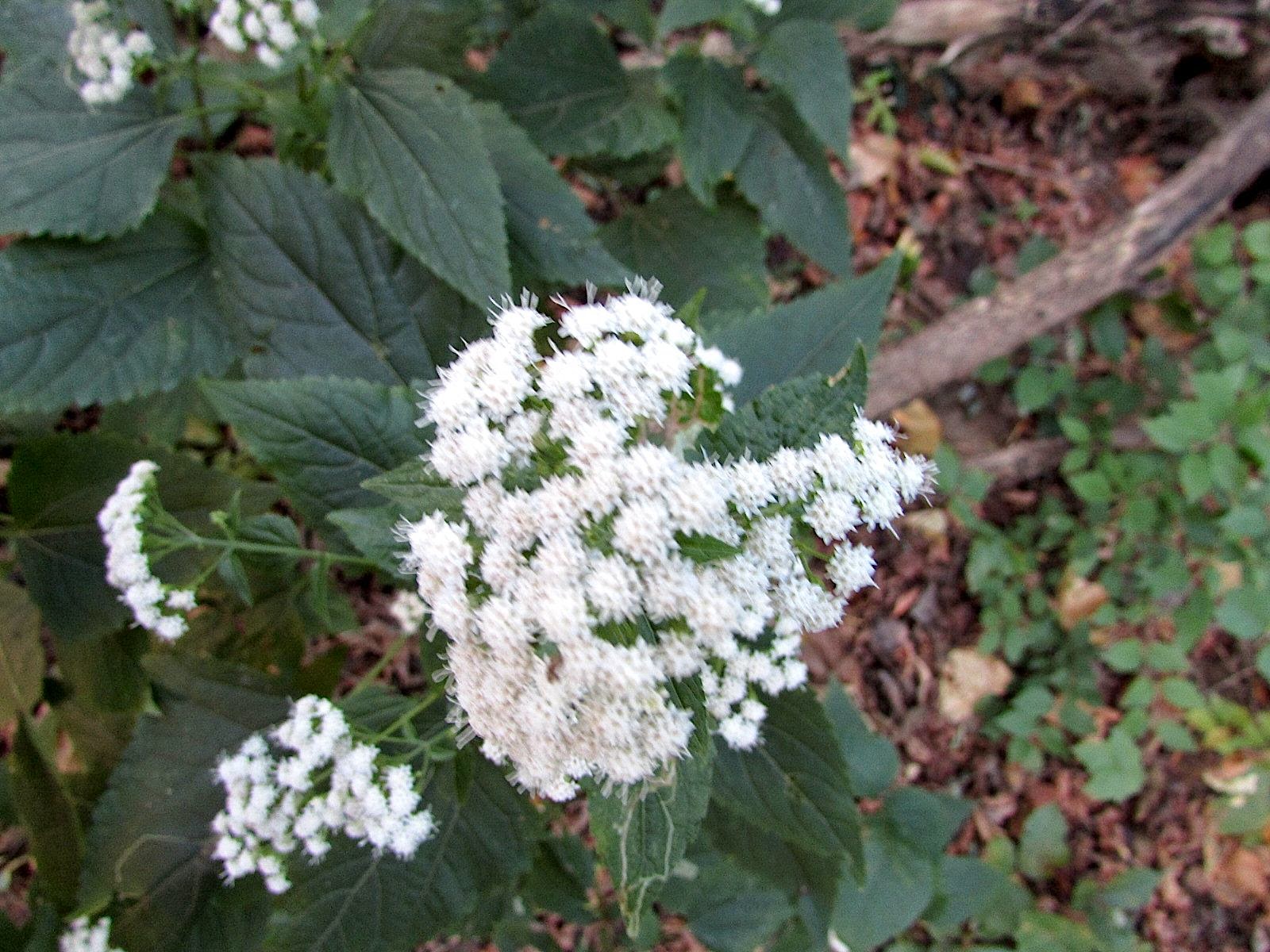
 When we walked up the hill from the metro station to the edge of Ft. Totten road and the beginning of the long strip of woods that makes up the park we found a first trail into the woods edged with white flowers I believe are snake root. They are showy and are available in nursery for home gardens. The wind was blowing the around so this close up shot is blurry because they were waving in the breeze as my camera shutter snapped.
Once we got into the woods we saw these tall single stalked goldenrods blooming in the dry sandy soil along the edges of the trail. It was mostly distributed near where the forest edge opened to the fields of the park grounds. 


One of them had a big bumble bee sitting on having a nectar meal and maybe collecting some of that nice yellow pollen. Also in these trail pictures notice those stones that cover the way. They are gray and white river stones deposited eons ago on top of this high hill in NE Washington DC. 


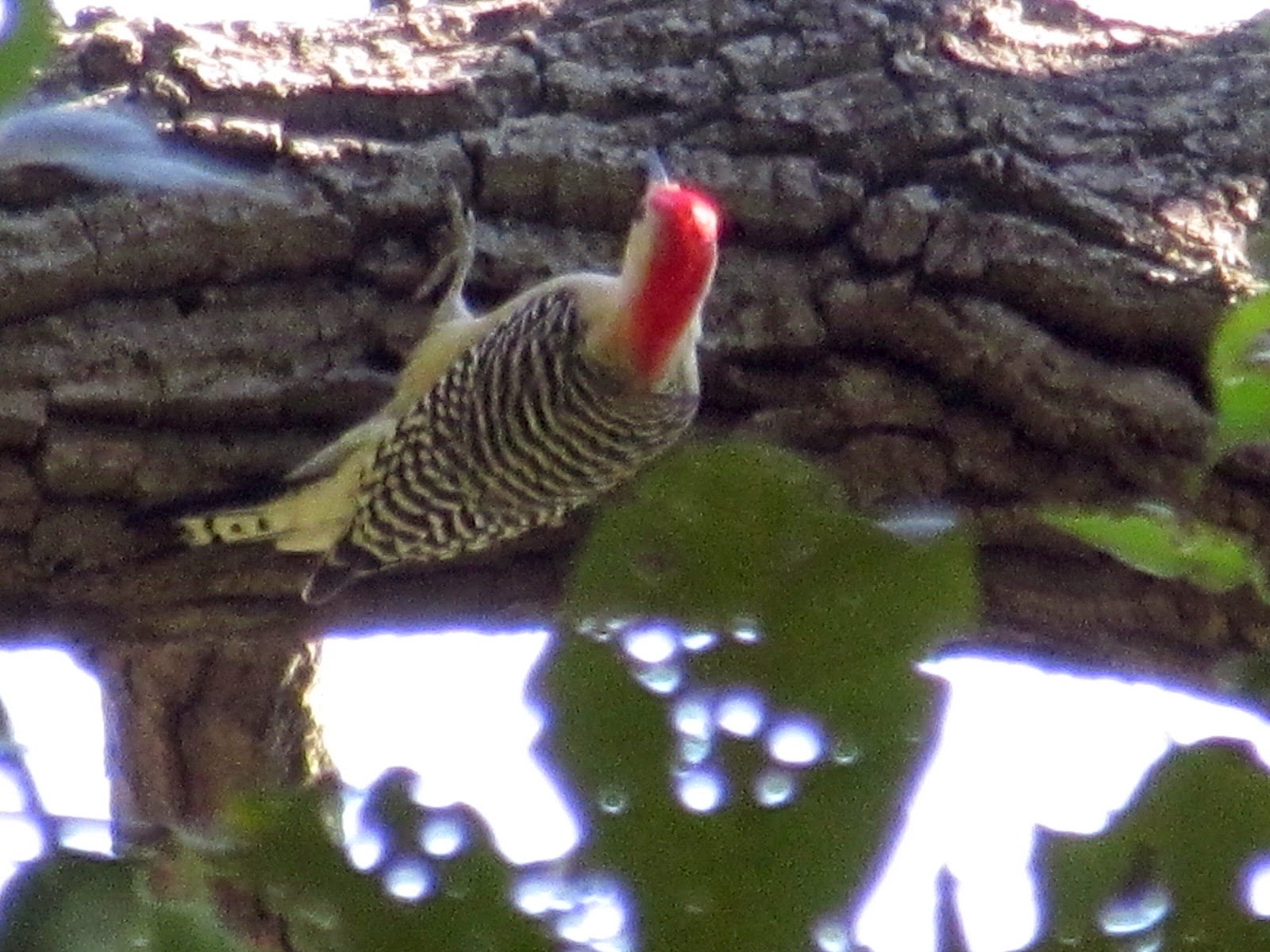
High overhead we heard and saw the red napped woodpecker calling and drilling for food in the dead tree branches. I used the zoom to capture a record of our sighting at the fort park. A matching woodpecker was on the tree next to my window at home one morning recently and here is a closer look. Same bird right?

 We made our way to a new area we hadn't explored down the hill as it turns out not the best area to walk since we are allergic to the native poison ivy and we saw a lot of it mixed in the edges of the trail plants with invasive English ivy. The trees in the park are huge and very tall so much that it hurt my neck to look up at them hunting for leaves to identify them. There were areas where the forest floor was covered with little seedlings of oak seedlings.


This shot is looking back up the hill we descended on our walk from the top to the bottom across behind the transfer station.


This is the large leaf magnolia we later learned is an American tree that has moved north in recent years finding homes in new forests delivered by bird carrying seeds to the new warmer climate here. 

At the bottom of the hill were a lot of toppled trees long gone towards bare wood and ready for decaying to take them back to the earth. A squirrel was scampering over them as we walked by and posed for a portrait briefly. 

Finally on top of the hill again we notice this interesting lichen growing on the leaf littered floor it was a brightly colored series of browns and yellow gold surrounded by new growth that looks like Japanese "invasive" honey suckle vine and blue and huckle berry.